DeepSeek V4 Pro Launch: New AI Model Costs Up to 14× More Than V4 Flash
DeepSeek Launches V4 Pro: Why Its Premium AI Model Could Change the Competitive AI Race
DeepSeek's latest V4 Pro model promises stronger reasoning, coding and AI-agent capabilities—but its significantly higher price compared with V4 Flash shows that the Chinese AI company is entering a new phase of its strategy.
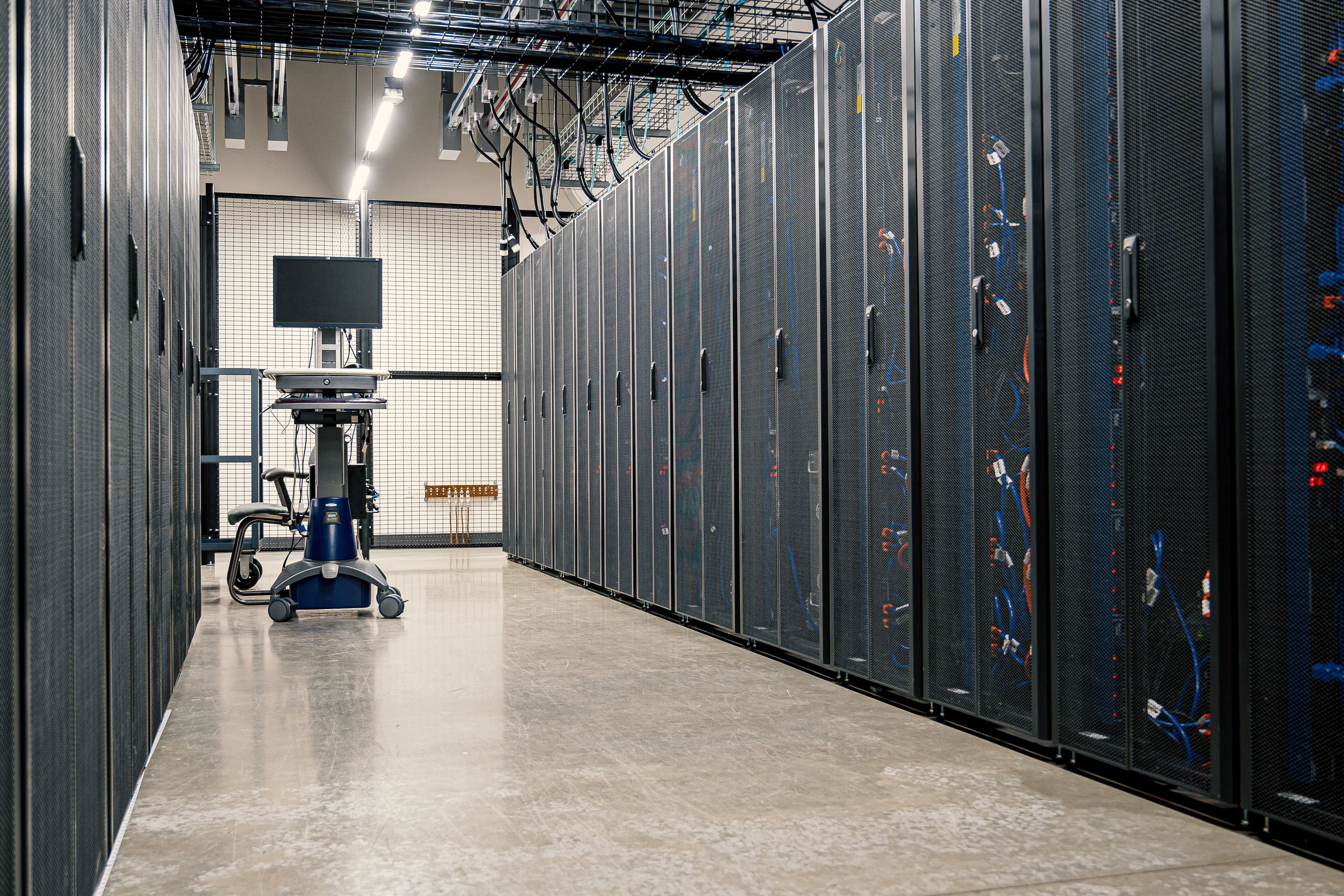
Modern data-center infrastructure powering today's rapidly expanding AI industry. Photo: Brett Sayles / Pexels
The artificial-intelligence race has spent the past few years revolving around one surprisingly difficult question: how much intelligence can an AI company deliver for the money?
DeepSeek became one of the companies most closely associated with that question after attracting worldwide attention for building highly capable AI systems while putting intense pressure on the industry's assumptions about cost. Now, the Chinese AI startup is taking a noticeably different step.
DeepSeek has formally launched V4 Pro, a more powerful version of its V4 family aimed at developers and users who need stronger reasoning, coding, long-context processing and increasingly important AI-agent capabilities.
But the headline is not simply that DeepSeek has released another model. The more interesting part is the price. According to Reuters, citing independent benchmarking firm Artificial Analysis, the newly released V4-Pro-0813 costs $1.32 per million input tokens and $3.96 per million output tokens. That works out to roughly nine times the input price and fourteen times the output price listed for DeepSeek's cheaper V4 Flash.
That premium tells us something important about where DeepSeek—and perhaps the wider generative-AI market—is heading. The industry may be moving away from a race based purely on making models cheaper and toward a market where companies offer clearly separated tiers for speed, affordability and maximum intelligence.
- Official V4 Pro release announced in August 2026
- $1.32 per million input tokens
- $3.96 per million output tokens
- Approximately 9× V4 Flash's input price
- Approximately 14× V4 Flash's output price
- 1-million-token context capability across the V4 family
- Available through DeepSeek's API, web and app products
- Designed for advanced reasoning and AI-agent workloads
V4 Pro Is About More Than Raw Model Size
It is easy to look at a new AI model and immediately focus on parameter counts, benchmark charts and token prices. Those numbers matter, but V4 Pro arrives at a time when the definition of a useful AI model is changing.
People increasingly expect AI to do more than answer a question inside a chat window. Developers are building systems that can search information, use software tools, inspect documents, write and test code, reason across large amounts of context and perform multi-step tasks with less human intervention.
This is the emerging world of agentic AI.
DeepSeek says V4 Pro substantially improves its capabilities for AI agents. That matters because agentic performance is becoming one of the major battlegrounds between leading AI companies. A model that can independently choose the right tools, maintain context across a long workflow and recover from mistakes can potentially deliver far more business value than one that simply generates impressive text.
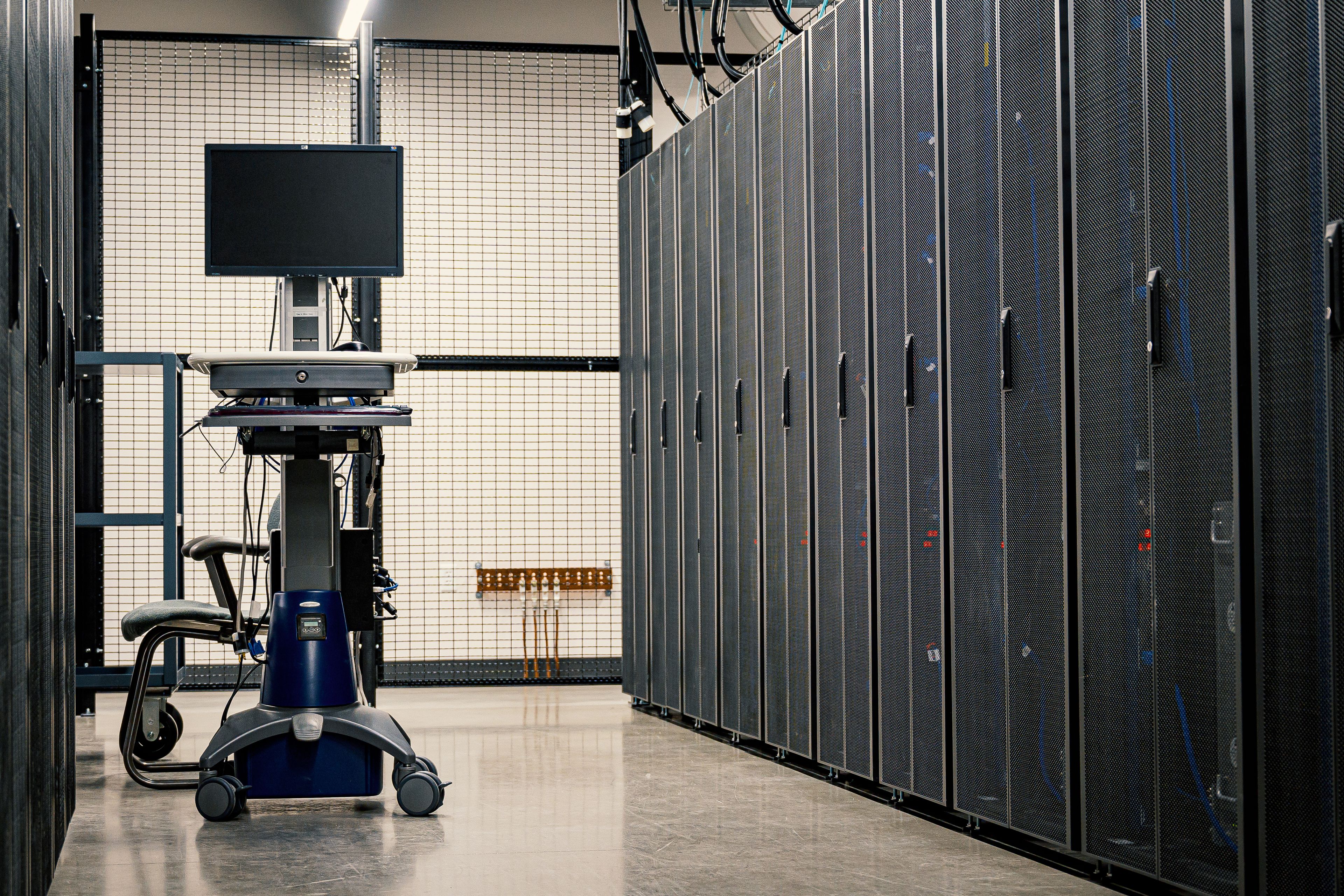
Running frontier AI models requires increasingly sophisticated computing infrastructure. Photo: Brett Sayles / Pexels
Why Is V4 Pro So Much More Expensive Than V4 Flash?
A fourteen-fold difference in output-token pricing naturally raises a question: why would developers pay the premium?
The simplest answer is that Flash and Pro are built for different priorities.
DeepSeek's V4 Flash is positioned as the faster and more economical model. For high-volume workloads such as summarization, basic customer support, classification, straightforward content generation and simple automation, paying for the company's most powerful model every time may make little economic sense.
V4 Pro is targeting the opposite end of the spectrum—tasks where stronger reasoning can potentially justify a higher inference bill. Think complex software engineering, autonomous agents, advanced research workflows, difficult mathematical reasoning, large-document analysis or situations in which getting the answer right matters more than generating it as cheaply as possible.
Independent results cited by Reuters provide an indication of that performance gap. Artificial Analysis gave the reasoning version of V4 Pro a score of 53 on its Intelligence Index, compared with 40 for V4 Flash. The index combines several areas, including coding, tool use, scientific reasoning, agentic tasks and long-context performance.
No single benchmark can tell developers whether a model will be best for their specific application, but the difference helps explain why DeepSeek believes it can place V4 Pro into a premium tier.
A 1-Million-Token Context Window Opens New Possibilities
One of the most important technical features of DeepSeek's V4 generation is its 1-million-token context window.
Context length determines how much information an AI model can work with during a single interaction. Larger context windows can allow users to provide huge codebases, lengthy reports, collections of contracts, research documents or extensive conversation histories without breaking everything into many smaller pieces.
That capability becomes especially valuable for AI agents. An autonomous coding assistant, for example, may need to understand relationships across hundreds of files before modifying a project. A research assistant may need to compare information from multiple documents while remembering earlier findings.
Long context does not automatically mean perfect understanding. Models can still overlook information, reason incorrectly or struggle to identify what matters inside enormous prompts. Nevertheless, expanding the usable context window gives developers significantly more flexibility when designing complex applications.
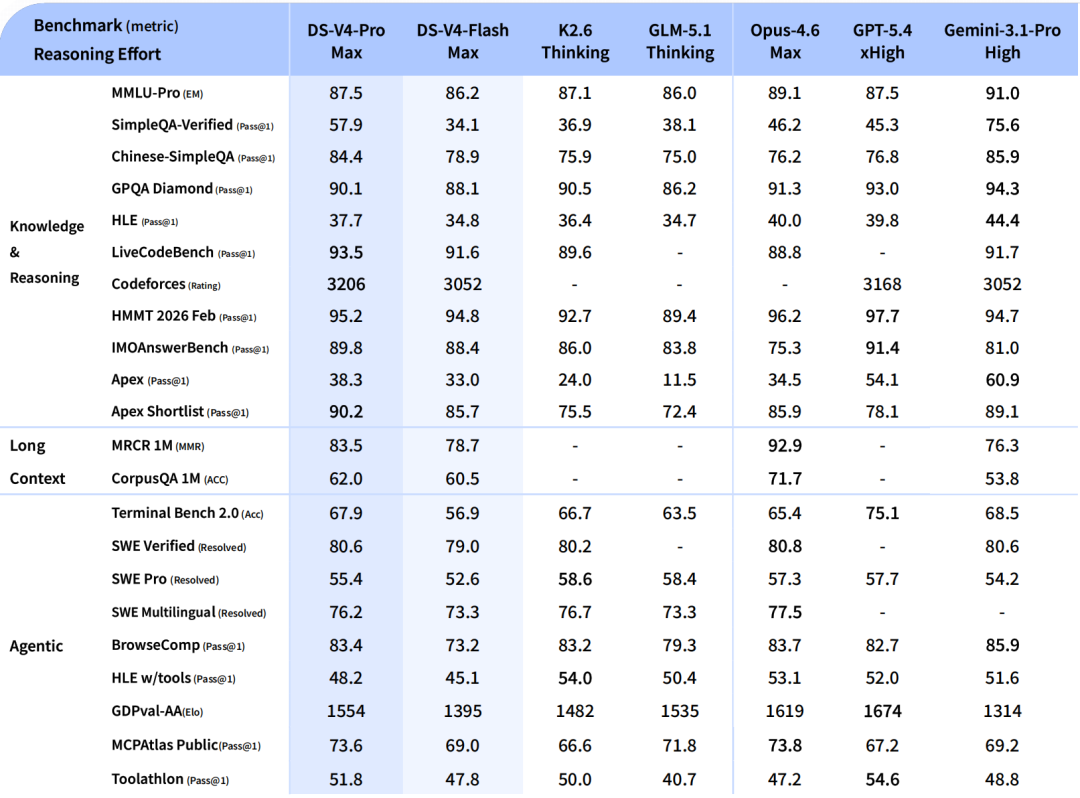
DeepSeek's published benchmark comparison for the V4 family. Source: DeepSeek API documentation.
DeepSeek Is Building a Two-Tier AI Strategy
The relationship between Flash and Pro may ultimately be more important than either model individually.
AI providers increasingly need to serve two very different groups of workloads. One group wants enormous scale, low latency and minimal cost. The other is willing to spend more for better reasoning and a higher probability of successfully completing difficult tasks.
DeepSeek now has a clearer answer for both.
V4 Flash can act as the everyday engine—the model a developer might call millions of times when speed and economics dominate. V4 Pro can become the specialist model that takes over when a problem becomes harder.
In practice, sophisticated AI applications may eventually use both. A software platform could route simple questions to Flash and automatically escalate difficult reasoning tasks to Pro. That type of model routing can help companies balance performance against cost rather than choosing one AI model for everything.
AI competition increasingly depends on both model intelligence and the infrastructure required to serve it at scale. Photo: Pexels
China's AI Competition Is Getting Much Tougher
DeepSeek is not developing V4 Pro in isolation.
Competition among Chinese AI companies has accelerated rapidly. Reuters notes that DeepSeek now faces pressure from companies including Moonshot AI, Zhipu AI, MiniMax, Alibaba and ByteDance. Each is attempting to capture developers, businesses and consumers as Chinese AI systems become increasingly capable.
This creates an interesting challenge for DeepSeek. The company gained enormous attention partly because of the idea that powerful AI did not necessarily have to carry the enormous cost associated with frontier systems. A much more expensive Pro model could appear to move away from that identity.
But there is another way to view the strategy.
Instead of abandoning low-cost AI, DeepSeek is keeping V4 Flash for cost-sensitive workloads while attempting to prove that users will pay more when the capability improvement is meaningful. If successful, that approach gives the company both a volume product and a premium product.
The Economics of AI Are Becoming Just as Important as the Benchmarks
The global conversation around AI often focuses on which model ranks first on a benchmark. For businesses deploying these systems, however, the more difficult question is often cost per successful task.
Imagine one cheaper model requires several attempts, human corrections and repeated tool calls to complete a complicated workflow, while a more expensive model succeeds the first time. The premium option could actually cost less overall.
The reverse is equally true. Using an expensive reasoning model to answer thousands of simple questions can quickly become wasteful.
That is why the difference between V4 Flash and V4 Pro should not be interpreted purely as "cheap versus expensive." Developers will need to measure which model delivers the best combination of reliability, latency and cost for each type of task.
What V4 Pro Means for the Wider AI Industry
DeepSeek's new flagship demonstrates how quickly the AI market is maturing.
The first phase of the generative-AI boom was largely about proving what large language models could do. The next phase is increasingly about segmentation: lightweight models for everyday tasks, powerful reasoning models for difficult problems, specialized models for coding and multimodal systems capable of understanding far more than text.
Pricing will become part of that competition.
Model providers are no longer competing only on intelligence. They are competing on inference efficiency, context length, agent capabilities, developer tools, ecosystem integration and the economics of running AI at massive scale.
DeepSeek's willingness to charge substantially more for V4 Pro suggests that it wants to compete not only as a low-cost disruptor but also as a provider of premium frontier-level capabilities.
The Bottom Line
DeepSeek V4 Pro represents an important shift for the company. V4 Flash continues to target users who prioritize speed and affordability, while V4 Pro asks developers to pay considerably more for stronger reasoning and agentic performance. The crucial question is whether the performance improvement is large enough to justify that premium in real-world applications. If it is, DeepSeek may prove that the same company can compete at both ends of the AI market: extremely economical AI at scale and premium intelligence for the hardest tasks.
What Happens Next?
The launch of V4 Pro will now move from benchmark tables into real-world testing. Developers will examine how reliably it writes code, operates tools, handles enormous context windows and completes complicated agent workflows. Those results will ultimately matter more than any launch-day headline.
DeepSeek is also introducing changes to its API pricing structure, including peak and off-peak pricing, showing that managing demand and computing resources is becoming an increasingly important part of operating frontier AI services.
One thing is already clear: the competition is no longer simply about releasing the smartest chatbot. The real race is becoming a much larger contest involving model intelligence, computing infrastructure, developer ecosystems, AI agents and the cost of turning all that intelligence into useful work.
With V4 Pro, DeepSeek is signalling that it intends to remain near the centre of that race.
Editorial Policy & Disclaimer
This article is published for informational and educational purposes only. We aim to provide accurate, useful and easy-to-understand coverage of technology, artificial intelligence and related industry developments.
Information in this article has been prepared using publicly available sources, including official company announcements, documentation and reputable news organizations. Whenever possible, important claims, pricing information, product specifications and announcements are verified against primary or credible reporting sources before publication.
Technology products, AI models, pricing, specifications, availability and company policies can change after an article is published. Readers should therefore check the official company website or documentation before making business, purchasing, investment or technical decisions.
Any opinions, analysis or interpretations presented in this article are intended to help readers understand the broader significance of the news and should not be considered financial, investment, legal or professional advice.
Images used in this article are either sourced from platforms that permit reuse, used according to applicable licensing terms, or included from official sources for informational and illustrative purposes. Copyright and trademarks remain the property of their respective owners.
We respect copyright and intellectual-property rights. If you are a copyright owner and believe that any material used on this website requires correction, attribution or removal, please contact the website administrator.
Transparency: AI-assisted tools may be used during research, editing, formatting or content preparation. Articles are reviewed and structured to provide clear, useful and reader-focused information rather than automatically publishing unverified AI-generated material.


Comments
Post a Comment